

'My life has been on hold for 28 years'
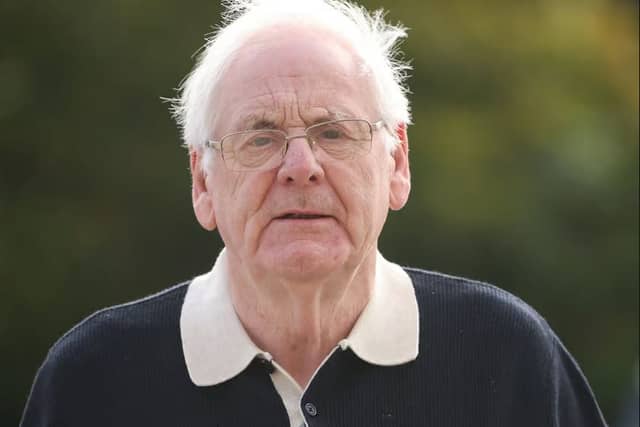

Omagh Survivors Campaigner returns to Inquiry following Stroke
OMAGH bomb justice campaigner, Michael Gallagher, has spoken of his determination in returning to the public inquiry into the 1998 atrocity just days after suffering a stroke.
Mr Gallagher, whose 21-year-old son Aiden was among the 31 killed in the Real IRA bombing, spent four nights in Enniskillen's South West Acute Hospital after developing symptoms while attending the hearings in Belfast.
Despite being advised to rest, he admitted pressing medical staff to allow him to return to Belfast, although he confessed the medical effects meant, "I will never be the same person again.”
“I actually put pressure on hospital staff to discharge me” he revealed.
The long-time campaigner praised the treatment he received at the Fermanagh hospital, saying, “when I think about the medical, nursing the ancillary staff, they just could not have been better. It's a hospital I would not hesitate going back to.”
Mr Gallagher said the first worrying signs occurred while attending the inquiry sitting at Forestside in Belfast. “When I started to walk, I was losing balance and I was tempted to slide to the left. The other thing that was happening was my speech was starting to slur, which was a big giveaway.”
Initially believing rest might help, he returned home to Omagh before he was driven to Enniskillen's emergency department the following day.
Seeing the impact of a stroke on other patients, he became resolute. “I remember thinking, if it's God's will, I'll walk right through those doors, and that's exactly what I've done.”
The campaigner said the health scare came after nearly three decades of campaigning for answers about the bombing and years spent gathering information relating to the attack.
“I have put my life on hold for 28 years, and that just became a part of my life,” he said. “Even when I'm in an evening like this, I'm sitting reading and trying to work out things. I thought in fact I was going to take a nervous breakdown.
“I think it was just all the information. At that point my head wasn't capable of taking it all in.”
Doctors informed him that stress can be a contributing factor in strokes, but Mr Gallagher stressed that his determination remains even if recovery now requires a different pace.
“What I can do now is everything that I'd done before I had the stroke, but the difference is now I've got to think about what I'm doing and do a little and take a rest and do another bit.
Despite his ordeal, Mr Gallagher spoke supportively of the inquiry process and those giving evidence. He singled out former Police Ombudsman, now Baroness Nuala O'Loan, police reviewer Brian McVicker and BBC journalist John Ware as particularly impressive witnesses.
“I was hugely impressed by the witnesses at the inquiry,” he said. “It was a privilege. It was an absolute privilege to be there.”
He also praised the inquiry chairman Lord Turnbull and the counsel and legal teams for their professionalism.
“The more people are asking questions and demanding answers, the better" said Mr Gallagher. He pledged to return in early November to hear long awaited testimony and cross-examination from former RUC Chief Constable Sir Ronnie Flanagan who will take the stand.
“I have huge respect for the counsel, the inquiry and the chairman.”
For Mr Gallagher, who spent almost three decades campaigning for truth and accountability, the commitment to the inquiry remains undiminished despite his recent health scare. “The point is,” he said, “we finally got this Inquiry, and we've got to work at it.”