

Omagh historian explores the Tyrone connection to Australia famine orphans

LOCAL historian Kenneth Collins explores the story behind Omagh Workhouse and the Tyrone connection to the Earl Grey Scheme for orphan girls during the Famine, and how even today ancestors of the ladies who were offered new lives in places like Australia are searching out their roots here. Many Australian descendants of the Workhouse Earl Grey Scheme Orphan Girls are today seeking information on their Great-great-grandmothers and rely on the museums set up in Melbourne, Sidney, and Adelaide where records are preserved and carefully kept of all the Irish workhouse girls and the ships in which they arrived on in 1849/50.
LOCAL historian Kenneth Collins explores the story behind Omagh Workhouse and the Tyrone connection to the Earl Grey Scheme for orphan girls during the Famine, and how even today ancestors of the ladies who were offered new lives in places like Australia are searching out their roots here.
Many Australian descendants of the Workhouse Earl Grey Scheme Orphan Girls are today seeking information on their Great-great-grandmothers and rely on the museums set up in Melbourne, Sidney, and Adelaide where records are preserved and carefully kept of all the Irish workhouse girls and the ships in which they arrived on in 1849/50.
In addition to availing of their locally sourced records quite a few of these family historians make the trip to Ireland to see first hand where their ancestors lived and came from.
To give an example of this just recently a posting on the Facebook page of the Omagh based Tyrone Family History Society was from Australian lady, Lynne Clarke asking for assistance from members for information on her Great-great-grandmother, Ann Arbuckle who as it happened was an Earl Grey girl from the Strabane area.
Through the various online websites the writer was able to build a picture of her ancestors who were a reasonably well off family of Presbyterians and it is highly likely that they worshipped in 1st Strabane Presbyterian Church on Main Street which was completely destroyed by fire on Christmas Day 1938 with only the walls, spire and bell surviving. The congregation moved temporarily to the old Meeting House of the 2nd Congregation until a new church was built on the Derry Road in 1957.
William Arbuckle was a publican and with his wife Isobella they had a family of eight living in the Camus-Strabane area. Misfortune overtook the family in December 1833 when their last child, Sarah was born as the mother Isabella died shortly after the birth and sadly this event was compounded by the death of father William a little later.
The net result of this was that the three youngest girls Sarah, Ann and Mary found themselves in the care of Strabane Workhouse until 1849 when the Master selected the three sisters as suitable for the Earl Grey Scheme for emigration to the Australian colony.
In the first week of November 1849 the three girls with their wood travel trunks made up a group of eleven assembled in front of the Admissions Block of Strabane Workhouse to make their way first to Dublin and then to Plymouth where they boarded the sailing ship Derwent and departed on November 9 1849 bound for Australia.
They arrived in Melbourne on February 25, 1850 and were taken to the reception centre there but unlike so many others waiting for suitable employers as servants the three Arbuckle's were collected by their older married sister Hannah and her husband George who had emigrated some years earlier and were living nearby in Melbourne.
As mentioned earlier one of the purposes of the Earl Grey Scheme was to level up the shortage of women in the colony at that time (men 8 to 1 woman) and this was fulfilled by Mary the eldest who was married within four months of arrival and Sarah and Ann following suit within the year.
The Earl Grey Scheme
The Famine years of 1845-1851 had a profound effect on the administration of the 163 Union Workhouses in Ireland with thousands of destitute and hungry people seeking refuge within the institutions set up by the Poor Law Commissioners of 1839.
Initially the workhouse system was set up for a maximum of 100,000 occupants but with the rapid influx during the Famine years emergency extensions to the George Wilkinson designed buildings were carried out to accommodate the additional numbers which in January 1847 were 108,000 rising in 1848 to 114,000 and in 1849 to 200,000 representing a 100% increase in the original designed capacity.
Some credit is due to the architect Wilkinson and the builders involved in the numerous extension projects speedily completed within a few years to accommodate the increased numbers.
Unfortunately even with the additional capacity, serious overcrowding was commonplace and in Omagh the building originally designed and opened in 1841 for 800 occupants by 1847 was altered and extended to house 1,100. This situation arose in all the workhouses at the time and in its wake brought about serious outbreaks of contagious diseases as well as a crisis for the Board of Guardians dealing with the financial support for the everyday running of the workhouse which in the main was raised by the local ratepayers.
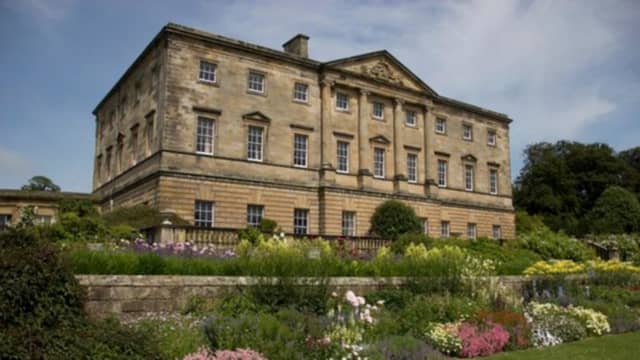
The only way to help solve the problems was to reduce the numbers and in 1847 the matter was taken to Parliament when Henry George Grey proposed a partial solution. Henry was at the time the 3rd Earl Grey Howick Hall in Northumberland who had followed in his father's footsteps in becoming a Whig MP, later rising to the position of Secretary of State for the Colonies in 1846.
His father Charles, 2nd Earl Grey served as Prime Minister of the UK from 1830 to 1834 and is probably better remembered for the Earl Grey Tea which was specially blended by a Chinese Mandarin to suit the hard water at Howick Hall and later marketed by Twynings who had the sole ownership of the brand.
The scheme Henry the 3rd Earl Grey put to the Poor Law Commissions in Ireland was quite simple in that young orphan girls between the ages of 14 and 18 within the Irish workhouse system should be offered the opportunity of free emigration to the Australian and Cape colonies.
The girls were to be selected subject to being of good character, industrious, in good health and proficient in reading, writing and arithmetic and so what was to become known as the Earl Grey Scheme was born and over the next two year period from 1848 to 1850 a total of 4,114 young girls from 18 union workhouses in Ireland made their way to a new life in Australia.
It is also on record that at the same time 61 girls were sent from Wexford Union to Capetown in the Cape Colony to relieve the overcrowding in their workhouse which had reached almost 1,800 in the buildings originally designed for 600.
There was a two fold aspect to this plan as in addition to easing the financial pressure n the Union ratepayers there just happened at the time to be a severe shortage of women in Australia with men outnumbering the fair sex by eight to one so the scheme was aimed at addressing the balance to ensure the future population increase of the new colony.
Considerable effort went into setting up the scheme to ensure the welfare of the girls as well as a successful outcome. Starting with the selection process the workhouse master, matron, medical officer, emigration official, along with the Board of Guardians were all involved in the various preparatory stages explaining details and enabling each girl to make a decision on whether or not to embark on the scheme.
Each emigrant girl accepted was to be provided with the following: six shifts, one shawl, two pairs of shoes, two gowns, two wraps, two petticoats, one cloak, two neck handkerchiefs, two pocket handkerchiefs, two linen collars, two aprons, one pair of stays, one pair of mitts, one pair of sheets, one bonnet, day and night caps, two towels, two bars of soap, brushes, needles and thread, a small sum of money and for different religions a Bible, a Prayer Book and a Rosary - quite a comprehensive list which must have left the girls very well equipped and pleased to start on their long journey.
To keep the collection together carpenters were employed to construct a wooden lockable travel trunk of regulation size with the owners name printed on the outside and a list of the contents shown on the inside, all of which cost around £4 which was paid for by the Board of Guardians.
The first stage of the journey was transportation from each workhouse to the port of Dublin and the mode of travel in those days varied depending on the Union location. The railways were sparse so horse drawn coaches and carts would have been used in most cases from the more rural towns.
Northern Ireland
In Northern Ireland groups from Antrim and Down would have made their way into Belfast to take a steamship to Dublin. The next stage of the journey was taken by steamer from Dublin to the port of Plymouth where on arrival the girls disembarked and spent some time in a centre run by the Colonial Land and Emigration Commission (CLEC), checking their papers, travel trunk contents and most importantly their state of health which ensured an extremely low in-transit rate of deaths, very unlike the migrants to the USA and Canada at that time.
Each Union was responsible for the travel expenses from their workhouse to the port of Plymouth which amounted to around 14 shillings for each girl.
In all 20 ships sailed from Plymouth transporting the girls to the three ports in Australia: Sydney (2,253); Melbourne, (1,255) and Adelaide, (606) and to Cape Town (61). Each ship had an appointed Surgeon Superintendent, Head and sub matrons and a nurse in charge of the hospital so the supervision, health and well being of the girls was more than well catered for.
The vast majority of the girls came from the Unions in the southern counties of Ireland
using 16 of the 20 ships and the remaining four were used for girls from Antrim, Down, Londonderry, Tyrone, Armagh and Fermanagh.
It is of interest to note that a total of 90 girls were from Tyrone on the four other ships: the Earl Grey (32); Derwent (9); Roman Emperor (20) and Diadem (29) - this last one carried the Omagh and Gortin contingent.
The first sailing ship to depart from Plymouth on June 3, 1848 was aptly named the Earl Grey - 571 tons and built in Newcastle upon Tyne in 1835, carrying 183 girls from the North of Ireland Unions and after a sea journey of around 13,000 miles docked at the port of Sydney, Australia on October 6, 1848.The cost of the voyage was around £13 for each girl and this expense was borne by the Government through the Colonial Land and Emigration Commission.
On arrival the entire group disembarked and were escorted to a local holding centre in the old Hyde Park Barracks which had previously been used to house transported convicts but had been renovated with the old convict hammocks on the upper floors removed and replaced with iron beds and mattresses, and walls newly plastered and painted.
The ground floors had been transformed into kitchen and canteen areas, offices and rooms for emigration officers, health officials, clergy and interviews with potential employers. Many of the emigrant servant girls took up domestic servant jobs with established Australian families but they were not allowed to take up employment with single men of publicans. A total of 2,253 Earl Grey girls were processed through this centre in the tow year period in which the scheme was in operation.
News of the Omagh Union Workhouse participation in the scheme appeared in the Tyrone Constitution on October 5, 1849 stating "the Omagh Union Guardians have sent 19 orphan girls from the workhouse this week provided with a suitable outfit as emigrants to Australia. The Government provides them with a free passage from Plymouth to which travel expenses are defrayed by the Omagh Union. Four orphan girls from the Gortin workhouse were also sent at the same time provided with a similar outfit.
"The girls on leaving presented an exceedingly clean and respectable appearance, being comfortably, neatly, and rather picturesquely dressed in tartan cloaks and straw bonnets reflecting much credit on the Master William J. Klophel and Matron Sarah Klophel who superintended the necessary preparations".
The girls would have been carefully selected by the Master and Matron, Mr and Mrs Klophel, Medical Officer, James White MD, and the final list approved by the Board of Guardians at their monthly meeting in the workhouse boardroom.
The following is the recorded departure list from Omagh and Gortin which gave the girls names, age, home location and religion. There are six extra names on this list possibly added and sent from some of the four other workhouses in Tyrone as a few of the townlands are in the Cookstown area.
Eliza Abrahams (16) Baronscourt Tyrone C of E
Eliza Ady (14) Drumgorman C of E
Sarah Anne Black (16) Tyrone C of E
Margaret Caldwell (18) Omagh C of E
Margaret Cowley (17) Duffley, Tyrone Presb.
Margaret Develin (17) Glenoch, Tyrone R.C.
Catherine Foreman (17) Omagh R.C.
Isabella Geatins (15) Milecras, Tyrone R.C.
Jane Givins (16) Omagh R.C.
Jane Grvyn (16) Omagh Presb
Catherine Halliday (18) Tyrone C of E
Catherine Johnston (16) Cookstown R.C.
Catherine Kean (16) Crosly, Tyrone R.C.
Mary Kean (18) Tyrone R.C.
Eliza Marshall (17) Tyrone Presb
Margaret Maynes (18) Omagh R.C.
Isabella McConway (16) Drumraw, Tyrone R.C.
Jane McElhill (16) Omagh R.C.
Catherine McGawlich (16) Omagh R.C.
Jane McKeown (18) Omagh R.C.
Elizabeth McLaughlin (17) Tyrone R.C.
Margaret McNally (15) Crosk, Tyrone R.C.
Catherine Mulgreen (17) Ashbon R.C.
Martha Murdock (16) Tyrone Presb
Jane Quinn (14) Arddstow R.C.
Mary Quinn (17) Tullymuch, Tyrone R.C.
Elizabeth Sharkey (17) Omagh R.C.
Elizabeth Taylor (17) Creevin Tyrone R.C.
Mary Thompson (15) Glenargh, Tyrone C of E
The home addresses are as recorded and some of the spellings have possibly been written down to follow the manner in which the girls pronounced them.
It is also of note that C o E has been used instead of C o I.
Around October 10 the group assembled outside the admissions block of Omagh Workhouse dressed and ready with their travel trunks to start the first stage of their journey to Dublin, possibly in horse drawn coaches as the railway had not yet reached the town but many stage routes had been established throughout Ireland by the Italian immigrant entrepreneur Charles (Carlos) Bianconi. One can only imagine the level of excitement and anticipation on their way to a new life leaving behind the harsh environment both inside and outside the confines of the workhouse and escaping the rigours of overcrowding and the various fevers raging throughout all of the institutions at that time.
On arrival in Dublin the group joined up with others from counties Down, Antrim, Fermanagh, Armagh and Londonderry to make up a total of 204 boarding the steamship which would take them to the port of Plymouth where they all underwent further regulation checks at the centre before boarding the sailing ship, Diademwhich sailed for Australia on October 13, 1849 under Captain Underwood.
The ship docked in Port Phillip, a suburb of Melbourne on January 10, 1850 and the girls were taken to a centre there for the now established process of integrating them with the local population. The long voyage had been uneventful according to the ship's log signed by Captain Underwood which recorded just one death and one birth during the journey both referring to other adult passengers on board.
My research revealed a rather sad event associated with the Omagth and Gortin girls in that the woman who so painstakingly prepared them for their journey Matron Sarah Klophel, wife of the workhouse master, died at the age of 40 on February 7, 1850. This was just a few weeks after the girls had arrived in Australia and although the cause of death is unknown, it is highly likely that she contracted typhoid or a similar fever that befell the many occupants and some workhouse officials alike.
The Diadem and its passengers were almost the last of the Earl Grey Scheme as after two years in operation it fell out of favour with the Government mainly on financial grounds. The 4,114 Irish girls settled into life in Australia integrating with the local population through employment and marriage. Judging by the numbers of their descendants today seeking information on their emigrant ancestors the Earl Grey Scheme was reasonably successful in solving the Australian population imbalance of 1847 with a slight easing of the rates burden in Ireland and a small reduction to overcrowding in the workhouses.