

‘THIS IS NOT GOOD ENOUGH’
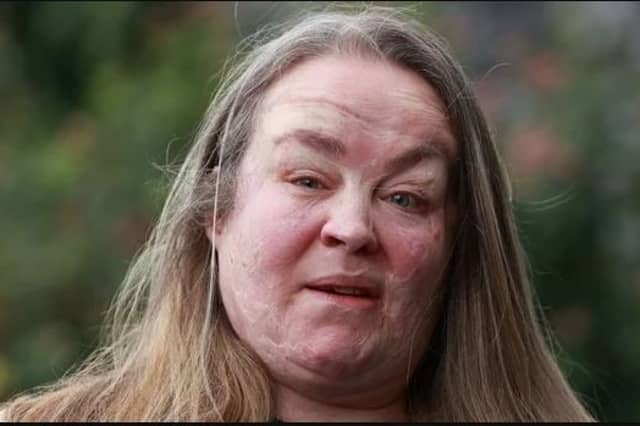

Donna-Marie McGillion’s account of overcrowding and distressed patients sparks hundreds of messages of support as calls grow for urgent action
AN Omagh bomb survivor who was given just a 20 per cent chance of survival after suffering horrific injuries in the 1998 atrocity, has issued a furious call for action after witnessing what she described as shocking conditions in the Accident and Emergency department at Altnagelvin Hospital.
Donna-Marie McGillion’s powerful account of her recent experience at the Londonderry hospital has struck a chord with hundreds of people, prompting an outpouring of messages from patients and families who shared their own distressing experiences of overcrowding, lengthy waits and people being left without beds.
In a hard-hitting social media post, Donna-Marie condemned the conditions she witnessed, describing an emergency department under immense pressure, with patients waiting to be treated and healthcare staff struggling to cope with the demands placed upon them.
She insisted that her anger was not directed at the doctors, nurses and other healthcare workers, whom she praised for continuing to care for patients despite the pressures they faced.
Instead, she challenged political leaders to take responsibility for the state of the health service, demanding urgent investment, reform and leadership.
“Tonight, Altnagelvin A&E feels less like a modern health service and more like a system on the verge of collapse,” she wrote.
“What I am currently witnessing is nothing short of shocking.
“The overcrowding, the backlog and the sheer number of people waiting to be treated is frightening.”
She said she had been particularly struck by the pressure on healthcare staff, adding that the stress they were carrying was “nothing short of disgraceful” as they continued trying to care for everyone in front of them.
Donna-Marie said elderly and vulnerable patients deserved to be treated with dignity and should not be left for hours in overcrowded departments because the health service had been allowed to reach breaking point.
“This is 2026. We can and must do better,” she declared.
“Our patients deserve better. Our elderly deserve better. Our healthcare workers deserve better.
“This is not good enough.”
Her comments have resonated with people across West Tyrone and beyond, with hundreds responding to her post to describe their own experiences of emergency care.
Among the most distressing accounts was that of a person whose partner, who was extremely ill, had been left sitting in a corridor for three days while waiting for a bed. The partner died three weeks later.
The bereaved person described the experience as disgraceful, saying their loved one had endured the indignity of sitting in a corridor while tired and afraid.
Others recounted relatives enduring lengthy waits, patients being left on chairs for hours and families witnessing conditions they considered unacceptable.
One person described the experience of spending days with their mother in the department as “absolutely traumatising”.
Another said they had attended A&E three times with sepsis and had been left in a corridor overnight on each occasion, although they praised staff for starting treatment in good time.
The recurring message from those responding was that healthcare workers were doing their best in circumstances that patients and families felt were no longer acceptable.
The strength of the reaction has added to mounting calls for urgent action to address the pressures facing Altnagelvin, where plans for a new Emergency Department remain dependent on funding.
SDLP West Tyrone MLA Daniel McCrossan has warned that the Executive’s failure to agree a Budget is standing in the way of the proposed development.
In a written response to Mr McCrossan, Health Minister Robbie Butler confirmed that Altnagelvin’s existing Emergency Department was originally designed to treat 35,000 patients annually but now handles between 70,000 and 80,000.
The Western Health and Social Care Trust has proposed a new Emergency Department as the first phase of a wider redevelopment, at an estimated cost of £73 million.
Although the Health Minister has indicated his support for the project, he has not committed funding, stating that a capital allocation must first be made through the Executive Budget process. The Trust would then have to update and submit its outline business case for approval.
Mr McCrossan said the figures demonstrated the scale of the pressure on patients and staff.
“A department built for 35,000 people is now seeing up to 80,000 a year. Patients and staff live with the consequences every day,” he said.
He criticised the continued failure to agree a Budget, arguing that patients were left waiting in overcrowded conditions while political parties argued over funding and priorities.
“The Trust has put forward a proposal for a new Emergency Department. The Health Minister says he supports it. Yet there is still no funding commitment because the Executive has failed to agree a Budget,” he said.
Mr McCrossan called on the Executive to agree a Budget, provide the funding required for the new department and establish a clear timetable for patients and staff.
“Every further delay has a human cost,” he warned.
For Donna-Marie, whose own life was changed forever by the Omagh bombing, the dignity and care afforded to vulnerable people is a deeply personal issue.
On August 15, 1998, she suffered catastrophic injuries when the Real IRA car bomb devastated the centre of Omagh. She sustained burns to approximately 65 per cent of her body, severe lung and ear damage, shrapnel wounds and a head injury that required 56 staples.
Initially given only a 20 per cent chance of survival, she was administered the last rites four times and spent six and a half weeks in an induced coma on ventilators.
Her 21-month-old niece, Breda Devine, who was due to be flower girl at Donna-Marie’s wedding, was killed in the explosion. Her fiancé, Garry McGillion, also suffered severe burns and helped rescue victims from the rubble.
The couple had been due to marry a week after the bombing but eventually married in March 1999 at Omagh’s Sacred Heart Church, seven months after their original wedding date. Their determination to rebuild their lives earned Donna-Marie widespread recognition, including a Pride of Britain Award.
Now, 28 years after the atrocity, she has used her public platform to speak out on behalf of patients and families who feel they are being failed by the health service.
Her message is clear: the pressure on hospitals cannot be allowed to become normalised, vulnerable patients must be treated with dignity, and healthcare workers must be given the facilities and resources needed to do their jobs.
With her post prompting hundreds of people to share their own accounts, and political representatives highlighting the scale of demand facing Altnagelvin, the calls for action have become increasingly difficult to ignore.
For those waiting in overcrowded corridors and emergency departments, the demand is not simply for promises of improvement, but for a funded plan and a clear timetable for change.