

‘No child should have to grow up in a cold home’- council chairwoman
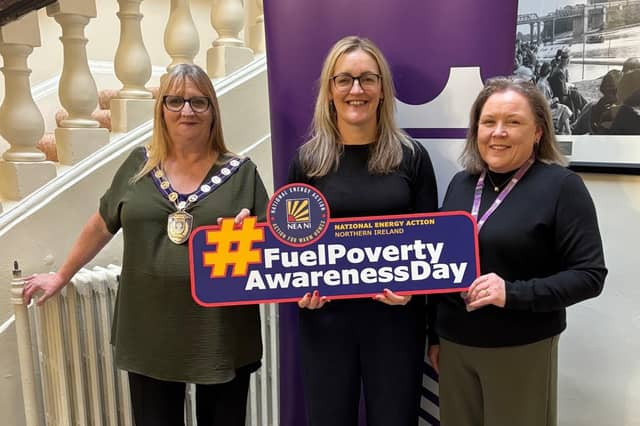

One in every two households across Fermanagh and Omagh is living in fuel poverty, with new figures exposing the scale of the crisis facing families across the district.
One in every two households across Fermanagh and Omagh is living in fuel poverty, with new figures exposing the scale of the crisis facing families across the district.
A stark warning has been issued over the growing impact of fuel poverty on children and vulnerable families in Fermanagh and Omagh, with the council chairwoman declaring that no child should have to grow up in a cold home.
The latest Northern Ireland House Condition Survey reveals that a staggering 50 per cent of households across the Fermanagh and Omagh district are living in fuel poverty - significantly higher than the Northern Ireland average of 33 per cent.
The figures equate to approximately 24,150 households struggling to afford adequate heating, highlighting the scale of the challenge facing communities as winter approaches and energy costs continue to place pressure on household budgets.
Ahead of Fuel Poverty Awareness Day today, Wednesday, November 18, Fermanagh and Omagh District Council and National Energy Action Northern Ireland (NEA NI) have joined forces to highlight the devastating consequences of cold homes and urge residents struggling with energy costs to seek help before reaching crisis point.
Council chairwoman, Councillor Debbie Coyle, said the figures painted a deeply concerning picture of the difficulties being experienced by families throughout the district.
"No child should have to grow up in a cold home, and no one should have to worry about keeping warm during serious illness or at the end of life.
"With fuel poverty now affecting one in every two households across our district, the challenge facing many families is significant," she said.
Her comments come amid growing concern about the physical and mental health consequences of living in cold homes, particularly for children, older people and those with underlying health conditions.
Cold and damp housing can have far-reaching consequences, affecting children's health, educational attainment and general wellbeing, while families are increasingly being forced to make difficult choices about heating their homes and meeting other essential household expenses.
The situation is particularly challenging in rural communities, where many households depend on home heating oil and remain exposed to continuing energy price pressures. However, households relying on gas and electricity are also struggling to keep costs under control.
Councillor Coyle said the council was working alongside NEA NI and community and voluntary organisations to ensure that practical assistance reached those most in need.
"Through our partnership with National Energy Action Northern Ireland and support from community and voluntary organisations, we are working to ensure help reaches those who need it most.
"I would encourage anyone concerned about heating costs this winter to seek advice early, as support is available and can make a real difference."
Through the Community Energy Saver Project, the council and NEA NI are working directly with residents to help reduce energy costs, maximise household income, access available grants and support, manage energy debt and improve the energy efficiency of their homes.
Pat Austin, director of National Energy Action Northern Ireland, said Fuel Poverty Awareness Day provided an important opportunity to expose the reality facing children and families living in cold homes.
"Fuel Poverty Awareness Day is an opportunity to shine a light on the reality facing many children and families who are living in cold homes.
"We know that cold, damp housing can have a serious impact on children's health, educational attainment and overall wellbeing. No child should have to worry about being cold at home, yet fuel poverty continues to affect far too many households," she said.
Ms Austin said Fermanagh and Omagh faced particular difficulties because of its rural nature, widespread reliance on home heating oil and the significant levels of fuel poverty experienced across the district.
She stressed, however, that the problem was not confined to oil-dependent households, with families using gas and electricity also struggling with rising energy costs.
She added that the Community Energy Saver Project was helping people understand what assistance they could access, maximise their income, improve home energy efficiency and connect with wider support services.
The council and NEA NI are now urging anyone worried about keeping their home warm this winter not to wait until their circumstances become desperate before seeking advice.
The Community Energy Saver Project, the Affordable Warmth Scheme, the Home Heating Oil Voucher Scheme, the Oil Savings Network, and the council's Cost of Living Hub offer a range of assistance.
Residents can find further information and details of available support at www.fermanaghomagh.com/costofliving or www.nea.org.uk/northern-ireland.
With one in every two households across the district affected by fuel poverty, the council and its partners' message is clear: keeping a home warm should not be a luxury, and no family should face the winter cold alone.