

Trust committed to addressing staffing challenges within SWAH neonatal services
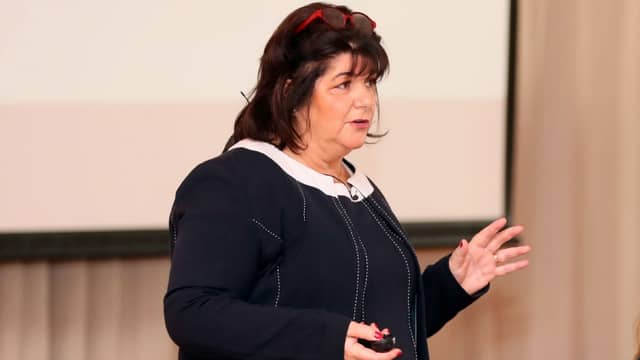

THE Western Trust has affirmed its commitment to working through staffing challenges at South West Acute Hospital's (SWAH) Neonatal Unit.
THE Western Trust has affirmed its commitment to working through staffing challenges at South West Acute Hospital's (SWAH) Neonatal Unit.
The health body has also hit back at claims that the unit is under long-term threat amid ongoing staffing pressures and difficulty in filling vacant positions.
Fears over the future of the unit have been raised within Fermanagh and Omagh District Council after it emerged that SWAH, which is commissioned to provide six special care cots, has had the provision cut to two in order to provide emergency care to babies born in the hospital and to provide stabilisation and transfer to another Neonatal Unit for ongoing specialist care if required.
It was also claimed that babies who require ongoing specialist care were having to be transferred from SWAH to other hospitals, sometimes as far away as Dublin, however the Trust said that to date, no babies have been moved to any neonatal unit outside of the region.
Earlier this month, chief executive Neil Guckian, told the Trust's monthly Board meeting that "neonatal nurse staffing remains critical with unfilled senior experienced nurse positions" adding that the situation is "expected to worsen in the coming months" as two further Qualified in Specialty (QIS) neonatal nurses retire.
Deirdre Mahon, director of Women and Children’s Services at the Trust, has spoken of the Trust's commitment to working through the staffing challenges.
She said: "I want to acknowledge the public’s concern surrounding the current position of our Neonatal Unit in South West Acute Hospital.
"Many will have seen the negative narrative online and in press in recent days.
"Contrary to some incorrect information quoted, I would like to reassure expectant parents and the wider public that the Trust is committed to working through the staffing challenges faced in the Neonatal Unit at South West Acute Hospital and indeed support neonatal services and maternity services across the Trust as a whole.
“It is important that the public and key stakeholders are aware of the background of the unit, its current position, the work we have completed to date and work that is currently ongoing.”
Continuing, Ms Mahon rebuked suggestions that the current situation is "about cutting neonatal or maternity services".
"The unit is commissioned for six special care cots. Over recent years/months many senior experienced neonatal nurses have left due to retirement, to pursue a different career pathway or to accommodate a better family life balance," she explained.
"This has left a huge depletion of experienced neonatal nurses with a result that the unit is having great difficulty providing adequate nursing cover for many shifts.
“Contrary to some of the recent headlines, this is not about cutting neonatal or maternity services.
"We are doing everything in our power to actively try to recruit and address gaps in our workforce to ensure a safe and sustainable neonatal service.
"However, we have to date been unsuccessful in attracting and employing trained/ experienced neonatal nurses to work in Enniskillen.
"We recognise that there is a regional and a national shortage of neonatal trained nurses and the situation in SWAH has been escalated to the Neonatal Network NI, Public Health Agency (PHA) and Health and Social Care Board (HSCB)."
She added that the "staffing crisis" has been further exacerbated by the pandemic, short-term sick leave and staff isolation within the Trust.
Deirdre continued: “Neonatal Units across the tegion have all endured significant staffing shortages and because of the specialist knowledge and skills required to care for preterm and sick babies, there has been no opportunities to seek cross-cover across hospital sites.
"The Trust do accept nurses (adult/children) and midwives - some midwives are working there temporarily at present but are not Qualified in Speciality (QIS) - to work in our Neonatal Units but they require a further period of training and support. They must complete a recognised course - three neonatal modules - through QUB to get the QIS qualification.
“Whilst we recognise that the shortage of neonatal nurses in South West Acute Hospital has been an ongoing concern, the unit have implemented contingency plans to ensure that all babies born in the hospital are safely cared for.
"This has included reducing cot capacity in order to provide emergency and stabilisation of sick and preterm babies to another regional unit for ongoing specialist care if required.
"It is also important to note that all of the babies transferred during this period would have met the criteria for transfer regardless of the aforementioned challenges and that to date no babies have been moved to any unit outside of the region."
As well as the continued and active recruitment, a project board has now been established to "look at all the different aspects of neonatal service delivery at South West Acute Hospital (and( to ensure the safe care for all babies born in our hospital.
"Within that, project teams will be implemented to look at key areas within the overall structure," Ms Mahon added. "The HSCB and PHA have members on this project board who are working closely with senior management and clinical leads who are responsible for overseeing how this work will move forward.
“South West Acute Hospital senior clinical management team and Human Resources are also currently engaging with an external advertising agency and working with our communication team to plan how we can try to address this nursing shortage locally and as a wider recruitment exercise.
“Initially, as part of this process, there will be a PR campaign launched, highlighting the Trust neonatal service and the opportunities available there and featuring this as a ‘great place to work and live’."
She added that recent media coverage on the matter has been "unhelpful in attracting staff to take up important roles" in SWAH.
"Moving forward, as we strive to promote and highlight Fermanagh as a ‘great place to work and live’ it will be very important for all key stakeholders and our local communities to work with us in helping promote the campaign and sharing positive messages publicly on this to attract staff to come and work in SWAH," Ms Mahon concluded.