

Omagh man who received life-saving heart transplant urges families to discuss organ donation
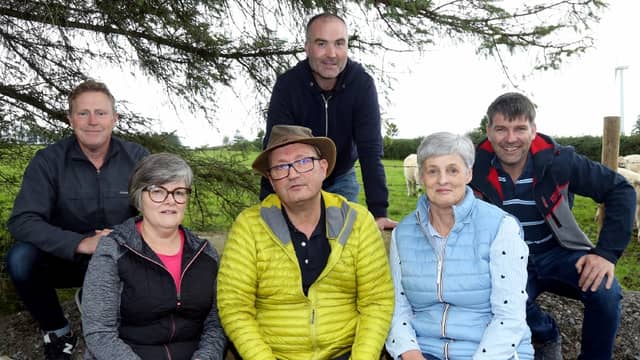

WITH this week marking Organ Donation Awareness Week, an Omagh man who received a life-saving heart transplant has urged people to register their donation decision and talk to their families about organ donation.
WITH this week marking Organ Donation Awareness Week, an Omagh man who received a life-saving heart transplant has urged people to register their donation decision and talk to their families about organ donation.
Tragically, every year approximately 10 to 15 people in Northern Ireland die whilst waiting for an organ transplant. But many people don’t realise that their family’s support is needed for organ donation to go ahead.
Currently there is a major shortage of organ donations, and there are around 144 people in Northern Ireland and approximately 6,000 people in the United Kingdom are waiting for life-saving transplants.
Omagh man, Stephen Kee, knows all to well the potentially life-saving impact that organ donation can have.
Having previously suffered from an unknown virus that was attacking his heart, Stephen received medical intervention, including a pacemaker, and had made a reasonable recovery.
But, in 2016, the virus returned, and proceeded to destroy the rest of his heart. He was airlifted Freeman's hospital in Newcastle, England, and was told he would die within days if he did not receive the new heart he desperately needed. He was immediately placed on an urgent transplant list.
Amid desperate prayers and an immense period of worry for Stephen and his family, the news then came that a a heart had been found and a transplant could be carried out.
The news was a miracle, but also poignant, as they was conscious that someone else’s family had just suffered a terrible tragedy.
Despite the many risks and potential problems involved, the operation proceeded and it was a success.
After almost a year in recovery and over six years on, while Stephen still requires specialist care, he has gotten his life back, and is living it to the full.
In the lead up to Organ Donation Week (September 24 to October 2), Stephen climbed Mullaghcarn Mountain, Tyrone's highest peak, in memory of his selfless doner.
He was also present at the unveiling of a brand new stone seat at Bessy Bell mountain, named 'The Rest and be Grateful', where people can rest and talk about their appreciation of organ donation awareness.
During Organ Donation Week, he is on a mission to raise awareness of the life-saving impacts of organ donation, and the importance of discussing it with loved ones.
Stephen explained: "I was a relatively healthy 50-year-old when I was taken down by an unknown virus. I found myself needing a heart transplant within days. I was essentially in hospital dying, with only a few days left to live, when a donor heart became available.
"Without a donor I would not be here today. It saved my life. Without the gift I received my daughter wouldn't have a father."
Stephen added: "In 1991 I signed the Organ Donation Register, but I never thought in a million years that I would be the one who needed it. My thinking at the time was if something happened to me, at least my organs could have helped someone. I never thought it would be the other way around."
Organ donation
The current organ donation law in Northern Ireland is to opt in to organ and tissue donation, but by Spring 2023, the law will change to an opt-out system.
But regardless of the changes to legislation, Stephen said it is very important that people discuss organ donation with their loved ones, as many people do not realise that their family’s support is necessary for organ donation to proceed.
After a person's death, their family will be consulted and any decision they make on behalf of the deceased will be respected. Only half of families agree to donation if they don’t know their loved one’s decision, but this rises to 9 out of 10 if they know their loved one wanted to donate. This make's the process less stressful for families.
Stephen explained: "I urge people not to assume that because we have opt out legislation that your organs will be automatically donated. You need to have conversation with your family members and register on the organ donation website.
"When it comes to organ donation, speed of the essence. In the event of an accident, organs need to be retrieved quickly, especially here in the West where we aren't that near a retrieval hospital.
"Running into any issues or uncertainty reduces the chances that much-needed organs can be retrieved."
Stephen concluded: "Many people don't think about it because it hasn't impacted them. But when they hear a story like mine, they you realise that these things have a big impact on saving families and saving lives."