

Keep your eyes peeled for Tyrone’s barn owls
ULSTER Wildlife is calling on people across Tyrone to get their eyes - and ears - open for one of Northern Ireland’s rarest birds after a bumper breeding season in neighbouring Fermanagh.
ULSTER Wildlife is calling on people across Tyrone to get their eyes - and ears - open for one of Northern Ireland’s rarest birds after a bumper breeding season in neighbouring Fermanagh.
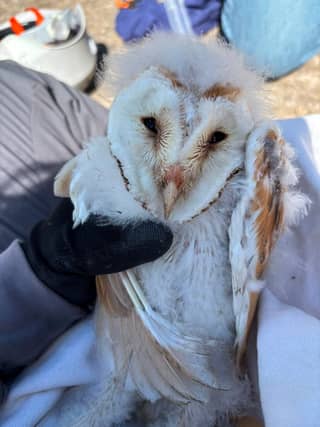
There is a real hoot of good news for barn owls, with two pairs in County Fermanagh successfully raising an impressive 10 chicks between them.
And now Ulster Wildlife wants Tyrone residents to help discover whether more of these elusive birds are quietly thriving in the county.
The appeal comes during Barn Owl Watch Week, August 24-30, with conservationists particularly keen to hear from people in Tyrone where records of breeding barn owls remain limited.
Barn owls are one of Northern Ireland’s rarest breeding birds, with fewer than 30 breeding pairs thought to remain.
So every sighting really does count.
The Fermanagh success story has given conservationists plenty to wing about, with each of the two pairs raising five chicks.
One brood has already fledged, while the second is just a few weeks behind.
The youngsters have also made history, becoming the first known barn owl chicks to be ringed in County Fermanagh, under licence from the Northern Ireland Environment Agency and with support from the British Trust for Ornithology.
Ringing provides valuable information about where the birds go, how long they survive and whether they return to breed, helping conservationists build a clearer picture of the tiny population.
Ulster Wildlife Senior Conservation Officer Katy Bell said the successful breeding season was particularly welcome after a difficult year for barn owls.
“Finding two successful nest sites, each with five healthy chicks, is fantastic news,” she said.
“Barn owls remain incredibly scarce in County Fermanagh, with few reported sightings, so this is a real boost for their conservation – and a real cause for celebration.”
The charity has been working with farmers and landowners for several years, installing nest boxes and helping to create suitable conditions for barn owls.
And the message is clear: you don't have to be an owl expert to help.
A barn owl might be spotted hunting over fields, hedgerows or roadside verges, particularly around dawn and dusk. They are mostly nocturnal and can be surprisingly easy to miss, but their distinctive heart-shaped face and pale underparts can stand out in low light.
And if you hear one, you might want to forget everything you know about the traditional “twit-twoo”.
Barn owls are sometimes called screech owls, thanks to their long, rasping call.
They are also remarkably silent in flight, making them rather good at flying under the radar.
Ulster Wildlife says there are currently no confirmed barn owl nest sites in Tyrone, but regular sightings suggest breeding birds could well be present.
Katy Bell said: “We believe there are more barn owls out there than our records currently show, particularly across the west of Northern Ireland.
“If you think you've seen or heard a barn owl, we'd love to hear from you. This information could help us locate important breeding areas and protect these iconic birds for the future.”
There are also clues that a barn owl may be taking up residence nearby.
They don't build conventional nests and will happily use old buildings, hollow trees or artificial nest boxes. White droppings, or ‘whitewash’, on barns, sheds, trees or fence posts can indicate a roosting or nesting site, while dark, oval pellets containing the fur and bones of small mammals are another tell-tale sign.
The birds face a number of pressures, including habitat loss, reduced prey and rodenticide use.
That makes local knowledge especially important.
Farmers, landowners and anyone regularly travelling Tyrone's rural roads around dawn or dusk are being urged to keep a beady eye out.
And if you get lucky, don't keep it under your wing.
Sightings can be reported to Ulster Wildlife through ulsterwildlife.org/barn-owls or by emailing [email protected].
All sightings are treated in the strictest confidence to help protect these vulnerable birds.
So, Tyrone, it’s time to owl get involved - because finding even one more breeding pair could make a big difference to the future of this remarkable farmland favourite.