

Augher mother speaks out on life-altering Covid vaccine reaction
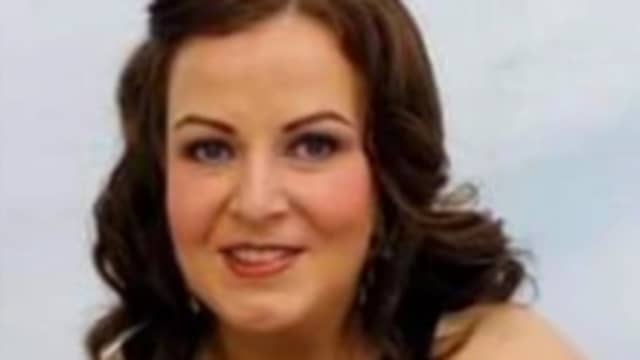

FOR Augher woman Deirdre McCann, life was a whirlwind of lesson plans, family routines, and the joyful chaos of raising two young children. A dedicated secondary school teacher at the Integrated College in Dungannon, she never imagined that a routine Covid booster jab would upend her world - leaving her in a coma, on a ventilator, and facing an eight-month battle for survival.
FOR Augher woman Deirdre McCann, life was a whirlwind of lesson plans, family routines, and the joyful chaos of raising two young children.
A dedicated secondary school teacher at the Integrated College in Dungannon, she never imagined that a routine Covid booster jab would upend her world - leaving her in a coma, on a ventilator, and facing an eight-month battle for survival.
Now, the 36-year-old mother-of-two is speaking out about the trauma that stole her independence, changed the course of her career, and left her with permanent health complications.
On January 19, 2022, Deirdre set out for work as usual, despite feeling unusually weak and experiencing tingling sensations in her hands and feet.
Assuming it was nothing serious, she pushed through the day. But as her symptoms worsened, she called her GP, who conducted a triage assessment over the phone.
“I don’t remember exactly what I told her, but she asked if I could lift my arms over my head and walk in a straight line. Whatever I said must have alarmed her, because she told me to go straight to A&E at Craigavon Area Hospital - and not to drive.”
Her GP sent an advance letter to the hospital, listing two possible diagnoses: stroke or Guillain-Barré syndrome (GBS), a rare but serious neurological disorder.
Guillain-Barré syndrome is a rare condition that affects the nerves. It's serious and needs urgent treatment in hospital. It affects your senses, your movement and things such as breathing and your heartbeat. It usually affects your arms and legs first before you get symptoms in other parts of your body.
Symptoms usually get worse over the first two to four weeks. You might feel tingling, numbness or pins and needles in your feet and hands first. This is usually followed by muscle weakness and difficulty moving your joints.
Other symptoms can include: sharp, shooting pain (nerve pain), often in your legs or back; problems breathing; problems with your face, such as drooping face muscles or trouble swallowing or speaking; problems with your eyes, such as double vision.
Some people’s symptoms become so severe that they are not able to move their legs, arms and face (paralysis).
At A&E, Deirdre felt herself deteriorating quickly. She collapsed onto a row of chairs, unable to support herself. By the time she was assessed by a neurologist, he was certain - she had GBS. Without waiting for test results, he immediately began treatment.
“I was getting weaker by the hour. I couldn’t even type on my phone. My breathing was becoming more difficult. The medical team moved me to the resuscitation area, where intensive care doctors assessed whether I needed to be placed in the ICU. They also called my husband, Simon.”
As she struggled to breathe, doctors decided she had to be placed in an induced coma and put on a ventilator.
“They were desperate for Simon to get there in time to say goodbye,” she recalled.
Deirdre remembers little of the three to four weeks she spent in the coma.
When she finally awoke, she was completely paralysed - even her eyelids refused to move. She panicked in the darkness, unable to communicate, until doctors sedated her again to calm her rising heart rate.
As it became clear that her recovery would be long and uncertain, doctors performed a tracheostomy to help her breathe.
For three months, she remained like that - unable to move, unable to speak, dependent on machines to keep her alive.
‘Terrifying’
“It was terrifying. The intensive care doctor and neurologist both said they’d never seen such a severe case before.”
Junior doctors and student nurses came to observe her case, as it was so rare. Meanwhile, Deirdre fought to regain her strength, enduring gruelling physiotherapy and breathing exercises. By May, she had one goal: to attend her brother’s wedding.
“I managed to make it to the church for the Mass. Then it was straight back to the hospital.”
From Craigavon, she was transferred to Musgrave Park Hospital in Belfast, where she spent another three months in rehabilitation. In total, she spent eight months in the hospital, learning to walk, move, and live again.
Deirdre does not doubt what triggered her ordeal.
“I had received a Covid-19 booster just a couple of weeks before this started. Almost immediately, I knew something wasn’t right - my lymph nodes swelled up under my arm. I phoned my GP because my mother had died from breast cancer, and I was worried. They assured me it was a normal reaction.”
Over the following weeks, she developed a persistent cough and chest tightness. She called the doctor twice over Christmas, only to be told it was a viral infection that would pass.
Her research later revealed that GBS can peak four weeks after its trigger - exactly the timeframe between her booster shot and the onset of symptoms. Then, in June 2022, a nurse casually mentioned that GBS had been officially listed as a potential side effect of the Covid-19 vaccine.
“I started talking to other patients. I met two other people in Musgrave who had suffered the same fate after the vaccine. The nurses even took a picture of us and called us ‘The Guillain-Barré Crew.’”
On Facebook, Deirdre discovered a support group for people who believe they were affected by vaccine side effects.
“One woman mentioned a batch of the vaccine from India. I checked mine - and it was from that batch. It sent shivers down my spine. Many others who received it had strokes or neurological issues.”
Deirdre is now adjusting to a life she never anticipated.
“I’ll never be my former self. I have permanent nerve damage. I developed arthritis because of the strain on my joints. I use a stairlift in my home because I can’t manage the stairs. People see me walking and say, ‘You’re doing great,’ but they don’t see the exhaustion, the daily struggles.”
She has accepted that she won’t return to teaching.
“It’s too strenuous, too stressful. That part of my life is over.”
Despite her challenges, she has found solace in a new community. She is now part of a support group for people affected by vaccine-related complications in Omagh, where they share their experiences and offer each other understanding that the wider world often lacks.
“I’d encourage anyone who has experienced similar issues to join us. You don’t have to sign your life away, but it helps to talk to people who understand.”
Deirdre is grateful to the medical staff who saved her life, but she remains critical of how vaccines were rolled out.
“The doctors and nurses did everything right for me. But the government’s push for universal vaccination - without accounting for individual risks - was wrong. If anything like this ever happens again, vaccines need to be tested more rigorously before being given to the public.”
She hopes that others who have experienced similar struggles will come forward by sharing her story.
“Hardly anyone I know has had Guillain-Barré syndrome. I wish I had someone to talk to back at the start. If you’re out there and going through this, reach out. You’re not alone.”
For support, Deirdre can be contacted at [email protected]
The next meeting of the Omagh branch of the Vaccine Injured and Bereaved Support Northern Ireland (VIBS-NI) will be held in the Station Centre, Omagh on Friday, February 21 from 2pm to 4.30pm. There will be a report on the group's attendance at the International Citizen's Meeting 2025 in Vierzon, France. You can contact VIBS NI on Facebook, X or email: [email protected]
Their motto is, 'You Are Not Alone'. and anyone interested or affected is welcome to attend.